Morpheus8 vs Microneedling: Which Goes Deeper?
Key Takeaways
- The core difference is radiofrequency heat: microneedling uses needles alone, while Morpheus8 delivers RF energy through the needles into deeper layers of skin.
- On depth, it’s not close — traditional microneedling typically reaches about 0.5–2.5mm, while Morpheus8 can be set far deeper (up to roughly 4mm on the face, and deeper still on the body).
- Microneedling shines for surface texture, tone, fine lines, and overall glow — usually at a lower cost. Morpheus8 adds real skin tightening and works on deeper laxity and scarring.
- Downtime is similar and modest for both: a day or two of redness. Morpheus8 can feel more intense and may need slightly more recovery on aggressive settings.
- Neither is “better” — the right choice depends on whether your main concern is surface quality or deeper firmness.
Microneedling and Morpheus8 get compared constantly, and for good reason: they’re built on the same foundation. Both use fine needles to trigger your skin’s natural repair process and build new collagen. If you’ve read about one, the other looks almost identical at a glance. So when you’re trying to decide between them, the natural question is the one in the title — which goes deeper, and does that actually matter for what you want to fix?
The honest answer is that “deeper” isn’t automatically “better.” It depends entirely on your skin concern. Let’s break down exactly how the two differ, where each one wins, and how to tell which is the smarter choice for you.
The One Real Difference: Radiofrequency
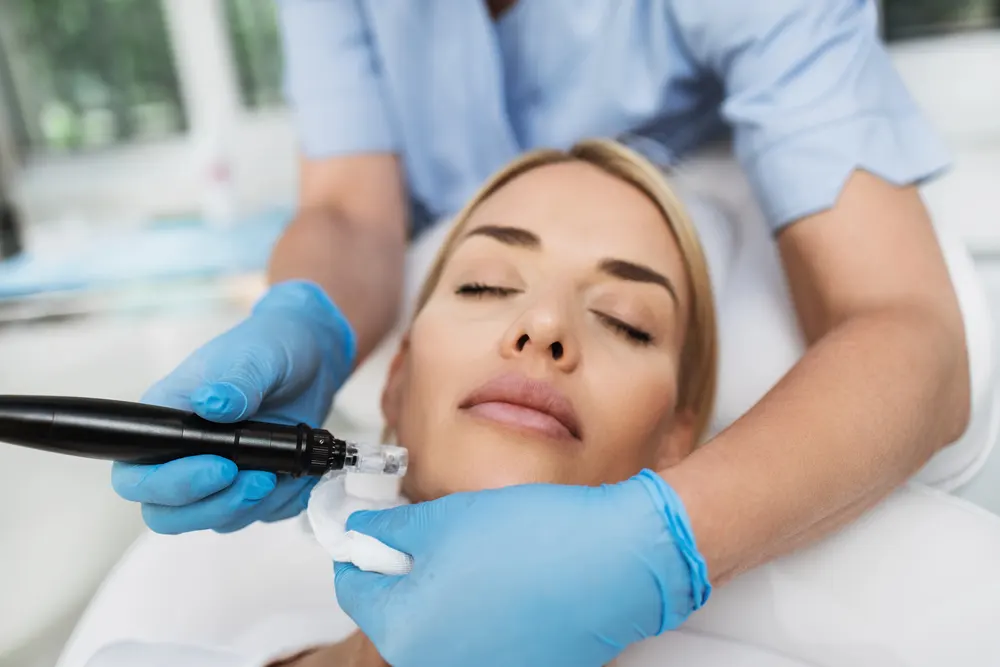
Strip away the marketing and the entire distinction comes down to a single ingredient: heat. Traditional microneedling, like our SkinPen microneedling, works purely mechanically. Fine needles create thousands of microscopic channels in the skin, and your body responds by producing fresh collagen and elastin to repair them. It’s a proven, effective way to improve texture and tone.
Morpheus8 does everything microneedling does, then adds radiofrequency (RF) energy delivered through those same needles. That heat penetrates into the deeper layers of skin, where it both tightens existing collagen and stimulates a more substantial remodeling response. In short: microneedling is needles; Morpheus8 is needles plus deep heat. Everything else flows from that one difference.
Which Goes Deeper — and Why It Matters
This is the headline question, so let’s be specific. Traditional microneedling pens generally reach a depth of about 0.5 to 2.5 millimeters, depending on the area and the concern being treated. That’s plenty to remodel the surface and upper layers of skin where fine lines and texture issues live.
Morpheus8 can be dialed much deeper — commonly up to around 4 millimeters on the face, and deeper still with body tips. Just as importantly, it’s delivering heat at that depth, not just a needle. Reaching the deeper structural layers is what allows Morpheus8 to tighten and address laxity that surface-level treatments can’t fully touch.
So the depth difference is real and significant. But here’s the nuance that matters: if your concern lives near the surface — uneven texture, dullness, mild fine lines — you may not need that depth at all, and the extra reach of Morpheus8 doesn’t add much for you. Depth is only an advantage when your concern is deep.
What Each One Does Best
Microneedling Wins For…
Microneedling is excellent for overall skin quality: refining texture, minimizing the look of pores, softening fine lines, evening out tone, and creating a healthy glow. It’s a gentler entry point into collagen-building treatments, generally comes at a lower price per session, and is a fantastic maintenance treatment. For many people in their late twenties through forties whose main goal is fresher, smoother skin, microneedling alone is genuinely all they need.
Morpheus8 Wins For…
Morpheus8 steps in when the concern is deeper. Mild to moderate skin laxity — a softening jawline, early jowls, crepey skin on the neck or body — responds to the tightening that RF heat provides. It also tends to outperform plain microneedling on deeper acne scars and on body areas where skin firmness, not just texture, is the issue. If you’re noticing sagging rather than just surface texture, Morpheus8 is usually the more appropriate tool. It’s also worth comparing against a heat-only tightening treatment like Forma, which uses RF without needling.
Downtime, Comfort, and Cost
The recovery experience is fairly similar for both: expect redness and a warm, sunburn-like feeling for roughly one to three days, after which most people return to normal activities and makeup. Because Morpheus8 adds heat and can work more aggressively, it may feel more intense during treatment and occasionally calls for a touch more recovery time, but for most people the difference is small.
Cost is where they diverge more clearly. Microneedling is typically the more affordable option per session, which is part of what makes it such a popular maintenance treatment. Morpheus8, with its added technology and deeper capability, generally costs more — but for the right concern, it delivers results microneedling can’t match, so it can be the better value when tightening is the actual goal. Both are usually done as a short series rather than a one-off.
How to Choose
Here’s the simplest way to decide. If your skin is in reasonably good shape and you want to improve texture, tone, pores, or fine lines — or you’re looking for an affordable, repeatable glow-up treatment — start with microneedling. If you’re seeing genuine laxity or sagging, want meaningful tightening, or are treating deeper acne scars or crepey skin on the body, Morpheus8’s depth and heat are worth it.
That said, skin is personal, and the line between “surface” and “deep” isn’t always obvious from the mirror. The most reliable way to choose is a quick professional assessment, where a provider can look at your skin and tell you honestly which treatment — or combination — will get you the result you’re after. You can also read more about each on our Morpheus8 and SkinPen microneedling pages.