Mature Hairline vs. Receding Hairline: How to Tell the Difference
Key Takeaways
- A mature hairline is a normal, one-time shift that happens in your late teens to early thirties — the hairline rises about half an inch to an inch and then stops.
- A receding hairline keeps moving back over time, usually deepening at the temples into an “M” shape, and is often a sign of pattern hair loss.
- The biggest clues are whether the change is ongoing and whether you see miniaturization — hairs getting thinner, finer, and weaker.
- Early loss often responds well to medication, Nutrafol, or PRP, while more advanced loss may call for NeoGraft hair restoration.
- Dr. Jerry and the team at New You Skin & Body Spa in Sarver, PA can tell you which one you have and what — if anything — to do about it.
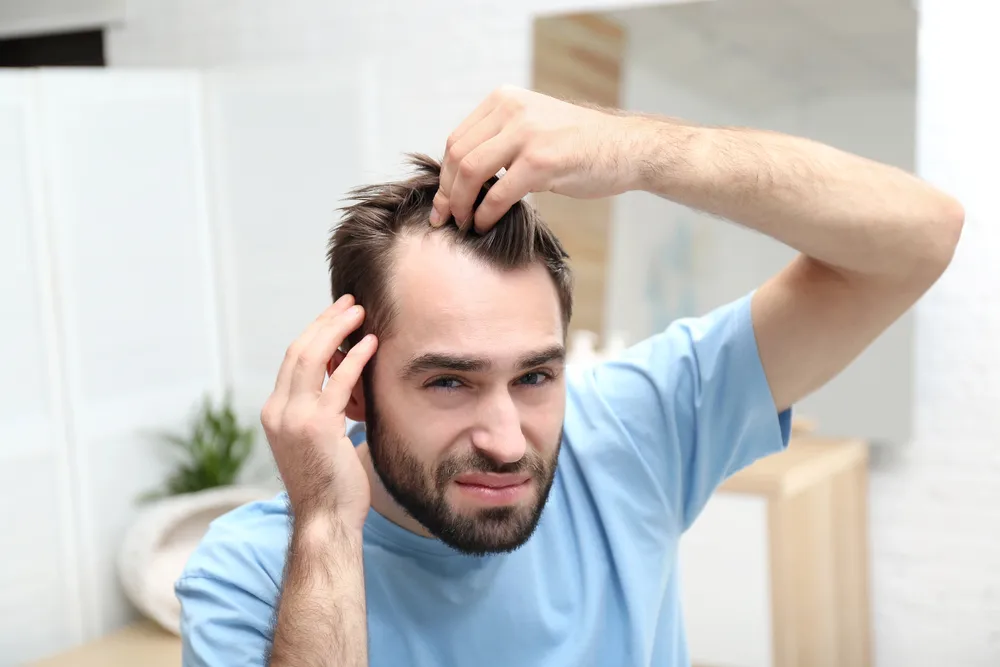
If you’ve caught your reflection lately and wondered whether your hairline is creeping backward, you’re asking a question we hear all the time. The tricky part is that not every change in your hairline means you’re losing your hair. Some shifts are a completely normal part of growing up; others are the first sign of pattern hair loss. Telling them apart is the difference between needlessly worrying and getting ahead of something while you still have the most options.
This guide breaks down exactly what a mature hairline is, how it differs from a receding one, what causes each, and how to tell which is happening to you. We’ll also walk through the treatments that actually work at each stage — so by the end, you’ll know whether your hairline is simply settling into adulthood or asking for a little help.
Why Your Hairline Changes in the First Place
Your hairline is not fixed for life. Most people are surprised to learn that the position and shape of the hairline naturally shifts as you move from adolescence into adulthood, driven largely by hormones. During your teenage years, the hairline tends to sit low and rounded across the forehead — what specialists call a “juvenile” hairline. As you mature, that low line gradually lifts and takes on a slightly more angular shape.
That shift is normal and expected. The challenge is that the early stages of true hair loss can look similar at a glance, especially around the temples. So before you panic at the first sign of a higher forehead, it helps to understand the two patterns side by side.
What Is a Mature Hairline?
A mature hairline is the natural “settling” of your hairline as you transition from a teenager into an adult. As androgen (hormone) levels rise in your late teens and twenties, the juvenile hairline moves up — typically about half an inch to an inch higher than where it sat in childhood — and then stabilizes. It’s a one-time adjustment, not an ongoing process.
Common signs of a mature hairline include:
- Timing. It usually happens between roughly ages 17 and 30.
- Modest, even rise. The line moves up about half an inch to an inch, often settling just above the highest crease when you raise your eyebrows.
- A balanced shape. The hairline stays relatively even across the forehead rather than carving out deep, uneven notches.
- No thinning. Hair density at the temples and crown stays the same — the hairs aren’t getting finer or weaker.
- It stops. Once it settles, a mature hairline holds steady. It doesn’t keep marching backward year after year.
A mature hairline is not a warning sign. It happens to the vast majority of adult men (and some women), and on its own it does not predict future balding.
What Is a Receding Hairline?
A receding hairline is different in one crucial way: it keeps going. Rather than rising once and stopping, the hairline continues to retreat over months and years. Most commonly it pulls back faster at the temples than in the center, creating the classic “M,” “U,” or “V” shape. This pattern is usually a sign of androgenetic alopecia — male or female pattern hair loss — though other medical factors can contribute.
Telltale signs of a receding hairline include:
- It’s progressive. The hairline keeps moving back over time rather than stabilizing.
- Uneven, temple-led recession. The corners retreat more dramatically than the middle, deepening the “M” shape.
- Miniaturization. New hairs grow in thinner, shorter, and lighter as the follicles shrink — often the single most reliable clue.
- Crown involvement. Thinning may also appear at the crown (the top-back of the head), not just the front.
- More shedding. You may notice extra hairs in the shower, on your pillow, or in your brush.
Because a receding hairline tends to foretell further loss, it’s the pattern where acting early genuinely pays off. If you’d like to see how recession is formally tracked, our guide to the Norwood Scale maps out all seven stages of male pattern hair loss.
Mature vs. Receding Hairline at a Glance
| Feature | Mature Hairline | Receding Hairline |
|---|---|---|
| Progression | One-time shift, then stops | Ongoing, continues over time |
| Typical age | 17–30, then stable | Can start in the 20s and keeps going |
| Amount of rise | About 0.5–1 inch | No fixed limit; keeps retreating |
| Shape | Relatively even across the forehead | Deep “M”/”V” notches at the temples |
| Hair quality | Density unchanged | Hairs thin, shorten, and lighten |
| Crown thinning | No | Often, as loss advances |
What Causes a Receding Hairline?
By far the most common cause is genetics, working through a hormone called dihydrotestosterone, or DHT — a derivative of testosterone. In people who are genetically sensitive to it, DHT gradually shrinks vulnerable follicles at the front and top of the scalp, so each new hair grows in finer and weaker until the follicle eventually stops producing visible hair. The follicles at the back and sides are usually resistant, which is why hair tends to remain there (and why those areas make ideal donor sites for a transplant).
Other factors that can contribute to or accelerate hairline recession include:
- Hormonal changes and DHT sensitivity
- Significant stress, illness, or surgery
- Nutritional gaps — low iron, protein, or certain vitamins
- Some medications and medical treatments
- Traction from consistently tight hairstyles (ponytails, braids, buns)
Worth knowing: Pattern hair loss is mostly inherited and hormonal — it isn’t caused by hats, frequent washing, or “clogged” follicles. That’s good news, because it means there are real, well-studied ways to slow it down and, in many cases, restore lost hair.
How to Tell Which One You Have
You don’t need special equipment for a useful first check. Run through these questions honestly:
- Is it still moving? A mature hairline settles and stays put. If yours has kept climbing over the last year or two, that points toward recession.
- Are the corners pulling back faster than the middle? Deepening notches at the temples are a hallmark of recession, not maturation.
- Are the new hairs thinner? Compare the fine hairs at your hairline to the thicker hairs further back. Noticeable miniaturization suggests pattern loss.
- Is the crown thinning too? Maturation affects the front only; crown thinning is a sign of pattern hair loss.
- What’s your family history? Early, pronounced balding in close relatives raises the odds that a change is recession.
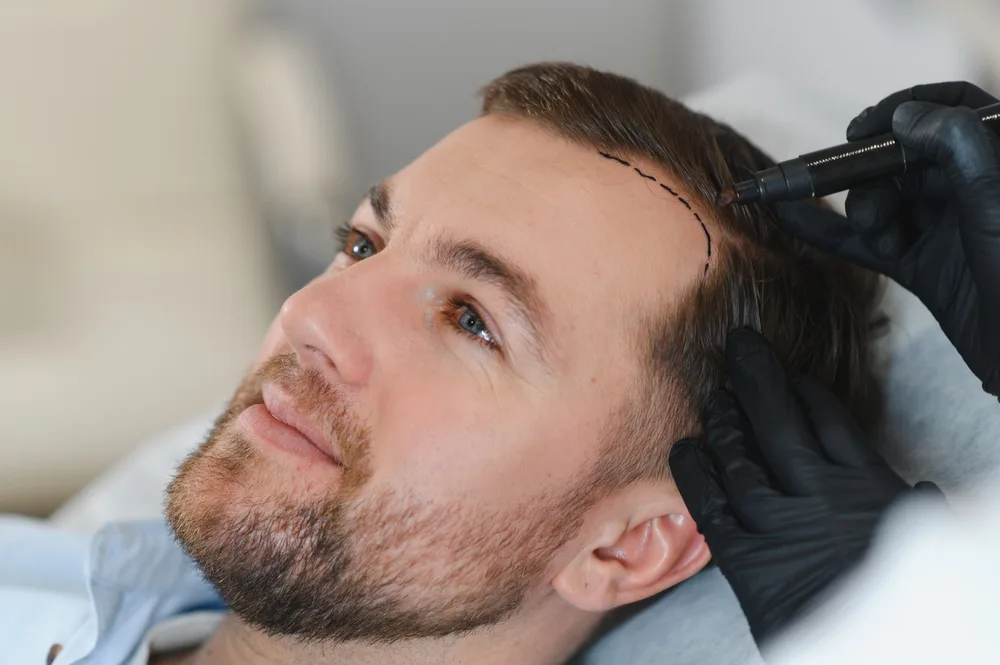
An old photo from a few years ago is one of the most useful tools you have — it makes a slow, ongoing change far easier to spot. That said, the most reliable answer comes from a professional scalp assessment, where a provider can examine follicle health under magnification and rule maturation in or out with confidence.
Can You Stop or Reverse It?
If it’s a mature hairline
A mature hairline is part of normal development, so there’s nothing to “fix” — and nothing you need to stop. The best thing you can do is protect the healthy hair you have: eat a balanced, protein-rich diet, be gentle with heat and harsh chemical treatments, and avoid constant tension from tight styles. If you simply want stronger, fuller-looking hair, a physician-grade supplement like Nutrafol can support the hair you already have.
If it’s a receding hairline
Here, early action makes a real difference, because it’s easier to keep a follicle alive than to revive one that has shut down. Common, evidence-based options include:
- Topical minoxidil — an over-the-counter treatment that can stimulate growth and slow loss.
- Oral finasteride — a prescription medication that blocks DHT, the main driver of pattern loss (most relevant for men; not used in women who are or may become pregnant).
- PRP therapy — uses growth factors from your own blood to encourage follicle activity; our PRP treatments are a popular non-surgical option.
- Nutritional support — supplements like Nutrafol to address thinning from the inside out.
When loss is more advanced — or when you want a permanent way to rebuild the hairline itself — a hair transplant becomes the gold standard. At New You, we offer NeoGraft hair restoration, a minimally invasive form of Follicular Unit Extraction (FUE). It moves your own DHT-resistant follicles from the back and sides to the thinning areas, leaves no linear scar, and produces natural, age-appropriate results. If you’re curious about the process, our hair transplant timeline walks through what recovery and regrowth actually look like, and our guide to how many grafts you might need helps set expectations.
When to See a Specialist
There’s no wrong time to ask, but it’s worth booking a consultation if you notice the hairline still moving after your early thirties, deepening notches at the temples, hairs that are visibly finer than before, increased shedding, or thinning at the crown. None of these means you’re destined to go bald — but they’re the signals that an expert assessment is genuinely worthwhile.
One related question we hear often is whether a pointed hairline counts as recession. If that’s you, our article on whether a hair transplant can fix a widow’s peak covers how a naturally V-shaped hairline differs from true loss.
Get a Clear Answer About Your Hairline
Mature or receding? It’s a question that’s hard to answer in the mirror but straightforward for a trained eye. Dr. Jerry and the team at New You Skin & Body Spa in Sarver, PA can examine your scalp, tell you exactly what’s happening, and build a plan that fits — whether that’s reassurance, prevention, or NeoGraft hair restoration. Call 724.294.8450 to book your consultation.
Disclaimer: The information provided here is for general knowledge only and should not be considered medical advice. For any questions or concerns about your health or medications, please consult your physician or healthcare provider, who is best equipped to provide guidance specific to your needs.