PRP Facial Benefits (a.k.a. the Vampire Facial)
Key Takeaways
- The “vampire facial” is a nickname, not a different treatment — it is the same PRP facial, combining microneedling with platelet-rich plasma from your own blood.
- The most reported benefits are improvements in skin texture, tone, pore appearance, acne scarring, and overall firmness — the things that read as “good skin” rather than “no wrinkles.”
- Because it uses your own plasma, there is no synthetic product involved, which avoids the possibility of reacting to a foreign filler material.
- It is a skin-quality treatment, not a volume treatment — if hollowness is your main concern, a filler or collagen stimulator is the better tool.
- Results are cumulative and build over weeks; a short series spaced roughly four weeks apart is common, with maintenance afterward.
- Clinical evidence is encouraging but variable across studies, so a good provider will set realistic expectations rather than promise a specific outcome.
Somewhere along the way, a treatment with a perfectly reasonable clinical name picked up a much better marketing name, and now half the people searching for it are typing “vampire facial.” The nickname sells, but it also creates confusion — plenty of people assume it is a separate, more extreme procedure than a PRP facial. It is not. Same treatment, catchier name.
What people actually want to know is simpler: what does it do, is it worth it, and how does it compare to the other options sitting on a med spa menu? This article walks through the real, documented benefits of a PRP facial, where the limits are, and how to judge whether it is the right fit for your skin.
First, What Exactly Are We Talking About?
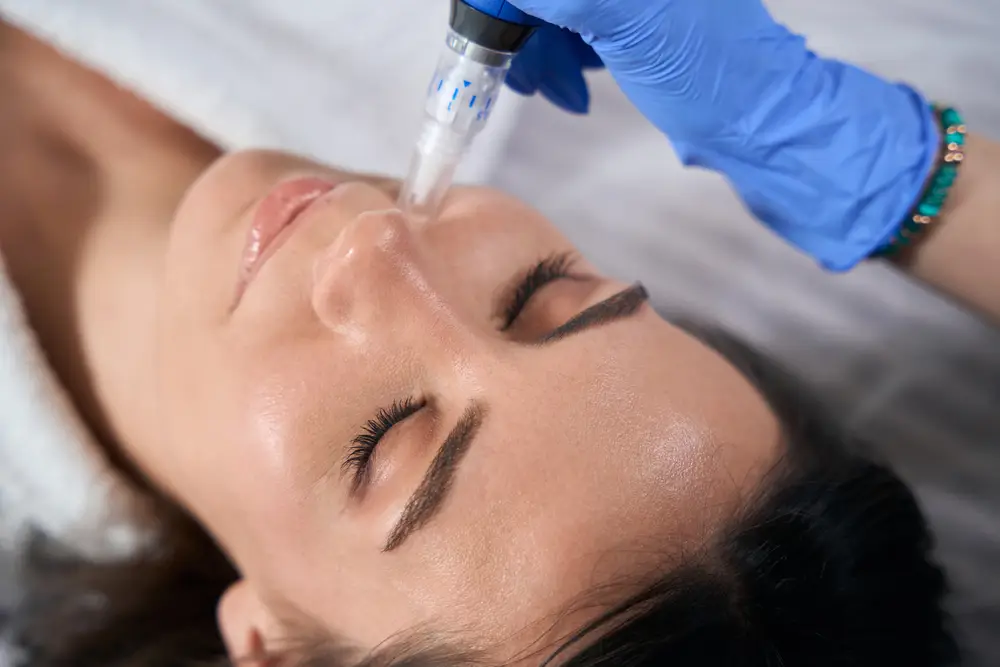
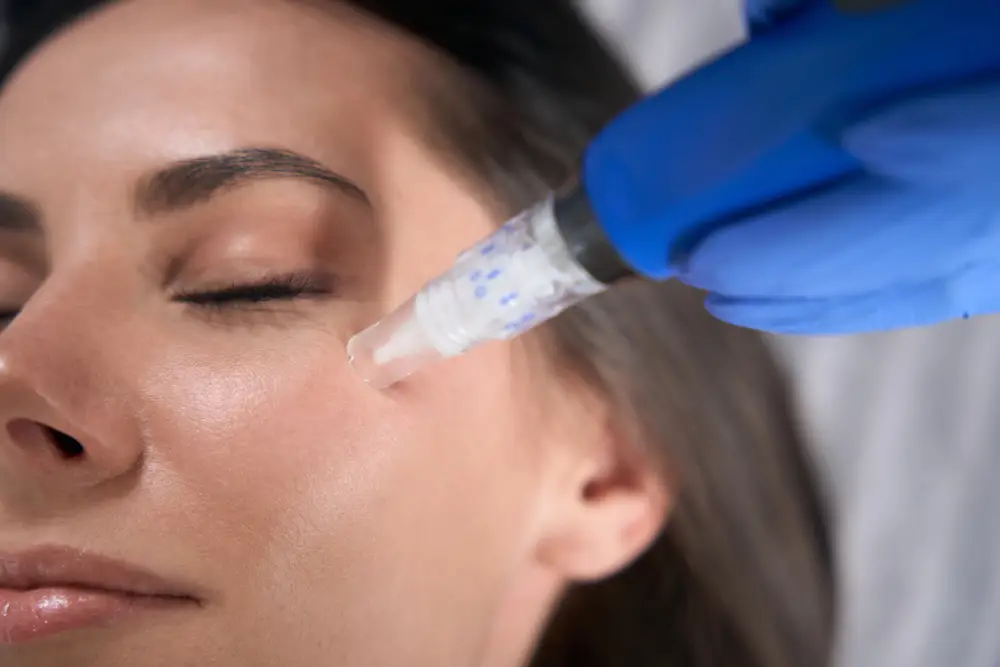
A PRP facial pairs two things. Microneedling creates thousands of tiny, controlled channels in the skin, which triggers your body’s natural wound-healing cascade — the process that produces new collagen and elastin. Platelet-rich plasma, drawn from a small sample of your own blood and concentrated in a centrifuge, is applied into those channels. Platelets carry growth factors, the proteins your body uses to signal repair.
So the microneedling opens the door and starts the repair process; the PRP is a concentrated dose of your own repair signals delivered right where that process is happening. If you want the full mechanics, our companion article on how the PRP facial works covers the step-by-step.
The Main Benefits of a PRP Facial
1. Smoother, More Refined Skin Texture
This is the benefit patients mention most often, and it is usually the first one they notice. Collagen remodeling in the upper dermis tends to smooth out the small irregularities that make skin feel rough or make makeup sit unevenly. It is less a dramatic before-and-after than a “my skin feels different when I wash my face” change — which is exactly why people come back for it.
2. Softening of Acne Scars
Microneedling has a well-established role in treating atrophic acne scarring, particularly the shallow, rolling kind. The micro-channels break up scar tissue and prompt new collagen to fill in beneath the depression. Adding PRP is intended to accelerate and strengthen that remodeling. Deep ice-pick scars are harder to treat with any single modality, and honest expectations matter here: improvement is realistic, erasure generally is not.
3. Pores That Look Less Prominent
Pore size itself does not really change — but the firmness of the skin surrounding a pore does, and that changes how prominent it looks. As collagen density improves, pores tend to appear tighter and less noticeable, especially across the cheeks and nose.
4. Improvement in Fine Lines and Crepey Skin
PRP facials tend to work best on superficial, crepey lines — the fine texture changes that come from thinning skin — rather than deep expression lines caused by repeated muscle movement. If your concern is forehead furrows or frown lines, a neuromodulator like Botox addresses the cause more directly. The two are often used together for different jobs.
5. Better Tone and a Healthier-Looking Glow
Improved microcirculation and new collagen tend to translate into skin that looks less dull and more even. This is subjective and hard to measure in a study, which is one reason clinical trials sometimes show less objective change than patients report — but “my skin looks alive again” is a real and valid outcome.
6. Safe for Delicate Areas
The under-eye region and the neck are notoriously difficult to treat. The skin is thin, and many resurfacing options are too aggressive there. A PRP facial can be performed at adjusted depths in these zones, which is why it is frequently chosen for the tear-trough area and the neck.
7. No Foreign Material
Because the plasma is yours, there is nothing synthetic being introduced, which removes the possibility of reacting to a foreign product. For patients who are cautious about injectables or want to avoid anything permanent, this is often the deciding factor.
What a PRP Facial Will Not Do
Being clear about the limits is part of giving good advice. A PRP facial does not add volume. It will not lift a flattened cheek, fill a deep nasolabial fold, or rebuild jawline structure — those are jobs for a dermal filler or a collagen stimulator. It also does not tighten significant skin laxity; that generally calls for radiofrequency or energy-based treatments.
It is also worth knowing where the science stands. Multiple studies have reported meaningful improvement in skin texture and patient satisfaction after PRP with microneedling, but the research varies considerably in how PRP is prepared and how outcomes are measured, and some trials have found that objective grading does not always keep pace with how happy patients are. That is a reason for realistic expectations — not a reason to avoid the treatment, but definitely a reason to be wary of any provider guaranteeing results.
How PRP Facials Compare to the Alternatives
If you are weighing options, this is roughly how the choices break down:
- Microneedling alone. Same collagen-induction mechanism, lower cost, no blood draw. A reasonable starting point if texture is your only concern and you want to test how your skin responds.
- PRP facial. Microneedling plus your own growth factors, aimed at a stronger and somewhat faster healing response. Better suited to scarring, thin skin, and stubborn texture.
- Chemical peels. Work chemically from the surface down, and are often stronger on pigment and tone than on scarring or firmness.
- RF microneedling. Adds radiofrequency energy for deeper tightening — a bigger treatment with more downtime, aimed at laxity rather than surface quality.
- Fillers and collagen stimulators. The right answer when the problem is lost volume rather than skin quality.
In practice, many people end up combining two or three of these over a year. The sequence matters, and that is a conversation worth having with a provider rather than assembling from search results.
Who Tends to Benefit Most
PRP facials tend to suit people who are bothered by the quality of their skin rather than its shape: adults dealing with post-acne texture, those whose skin has started to look thin or dull, people who want a natural-material option, and anyone looking to improve delicate areas where stronger treatments are not appropriate.
They are less suited to people whose main concern is volume loss or significant sagging, and they are not appropriate for everyone. Blood or clotting disorders, certain autoimmune conditions, active infections or breakouts in the treatment area, poorly controlled diabetes, a history of keloid scarring, and pregnancy or breastfeeding are all reasons a provider may recommend a different path. Some medications and supplements affect platelets and may need to be paused beforehand.
What to Ask Before You Book in Sarver, PA
Because a PRP facial involves drawing blood and reintroducing it through broken skin, the setting matters more than with most aesthetic treatments. A few questions worth asking any provider, anywhere:
- Is this a licensed medical facility, and who will be performing the treatment?
- What are that person’s credentials and training in both phlebotomy and microneedling?
- Is all equipment that contacts blood single-use and disposed of after one patient?
- How many sessions do you expect I will need, and what does the full series cost?
- What results are realistic for my specific skin — and what is not?
Any reputable provider will answer all five without hesitating. If a facility is vague about credentials or equipment, that is your answer.
Is a PRP Facial Worth It for You?
The most useful way to decide is to name the problem you actually want solved. If it is texture, scarring, dullness, or thin skin, a PRP facial is genuinely worth considering. If it is volume, structure, or deep expression lines, something else will serve you better — and a provider who tells you that up front is one worth trusting.
The team at New You Skin & Body Spa in Sarver, PA takes that approach with every consultation. We will look at your skin, listen to what is bothering you, and tell you honestly whether a PRP facial, SkinWave HydraFacial, microneedling, or a combination makes the most sense — including when the answer is “not this one.”